Rarity & identity • 6 min read • By RareScore Research Desk • Published 2026-09-29 • Updated 2026-09-29
The Rarest Personality Traits (and Why Combinations Matter More)
Most lists rank single labels. A single trait score is rarely what makes a personality uncommon; the combination usually is.
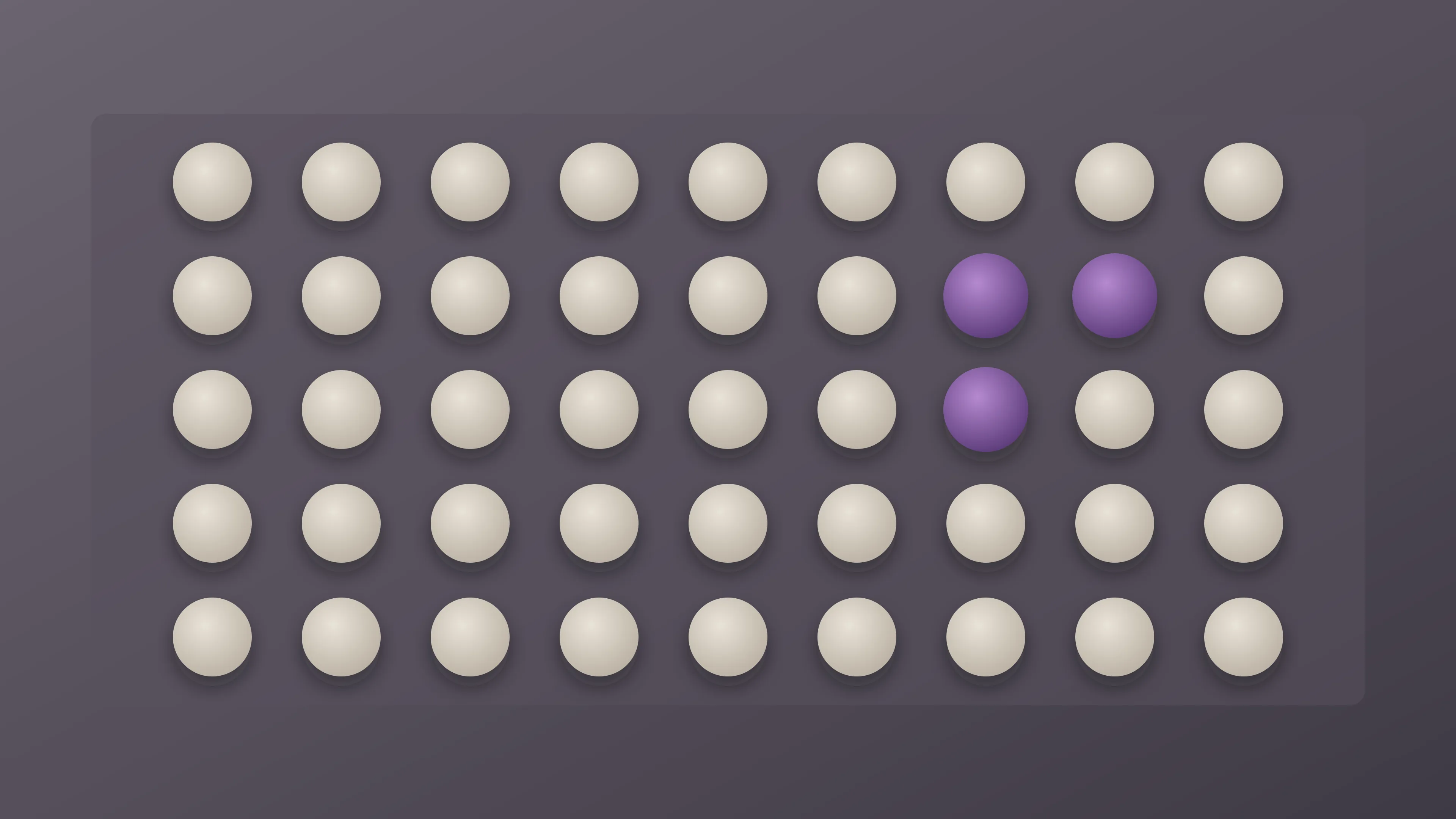
What to know before reading further
- There is no single agreed list of the rarest personality traits. The answer depends on the trait model, the sample, and whether you measure one score or a whole profile.
- An extreme score on one trait is uncommon by definition, but it describes one axis of a person, not a whole personality.
- Ordinary scores can combine into a pattern few people share. Unusual scores can also land somewhere crowded.
- A rarity claim is only as good as its comparison group, its sample size, and the way it handles traits that move together.
This guide answers: Find out which personality traits are rare, why ranked lists of single traits mislead, and how trait combinations change the answer.
Rarity lives in the combination
Search “rarest personality traits” and you get ranked lists: INFJ, INTJ, high openness, low agreeableness, “old soul,” and so on. Some cite survey percentages. Many do not. Almost all treat rarity as a badge tied to one label.
A single trait score can be uncommon and still leave you with a common overall profile. Ordinary scores can also combine into a pattern few people share. That second case is the more useful one to think about, and it is the question the How Rare Am I? test is built around. For the statistical view, see What Makes a Personality Rare?.
What people usually mean by “rarest personality traits”
When someone asks for the rarest personality traits, they usually want one of three things:
- A named type that shows up less often in a popular typology, usually an MBTI-style list.
- A trait that feels socially unusual: extreme independence, low need for approval, intense curiosity, or a strong preference for solitude.
- Confirmation that their mix of motives is uncommon.
Only the third maps cleanly onto a useful rarity estimate. The first two can start a good conversation, but they make weak population claims unless the comparison group, sample size, and method are stated.
Single traits are rarely rare on their own
Take the Big Five: Openness, Conscientiousness, Extraversion, Agreeableness, and Neuroticism (or Emotional Stability). Extreme scores exist. Some people sit far from the middle on one scale.
An extreme score is still only one axis. Plenty of people score high on Openness. Plenty score low on Extraversion. Calling either “one of the rarest personality traits” flattens a continuous distribution into a trophy.
Ask how far the score sits from the sample center, how stable the estimate is, and whether the same score shows up with different motives in different people. Without those checks, “rare trait” often means “this label feels special.”
Combinations create most of the real rarity
Profile rarity asks how many people share something close to your whole pattern. Traits are correlated: a meta-analysis of Big Five intercorrelations by van der Linden, te Nijenhuis and Bakker (2010) found the five domains are not independent of each other. So you cannot treat every uncommon answer as a separate jackpot and multiply the odds.
That is why combinations matter more than a single “rarest trait” ranking. Ordinary sliders can still form an uncommon joint profile, and flashy scores can land somewhere crowded.
For motives that coexist without canceling out, see Why Personality Traits Can Conflict.
Context shifts can be rarer than average scores
Average trait labels hide how people change between situations. Some people stay fairly consistent across settings. Others change sharply under public evaluation, intimacy, competition, or uncertainty. Mischel and Shoda (1995) described these stable “if this situation, then this behavior” patterns as part of personality itself.
A pattern like “reserved with strangers, directive with close friends, calm about practical risk, reactive to betrayal” can say more about a person than the word “introvert.” If there is rarity here, it lives in the shape of the change, not in one global adjective.
Popular type lists vs trait profiles
MBTI-style “rarest type” articles dominate this search because they are easy to skim and share. The published numbers also move between samples. In the US sample reported in The Myers-Briggs Company’s US supplement to the MBTI Manual (3,578 adults), the least common types were ENTJ (1.8%) and ENFJ (2.3%). In a Singapore sample of 12,838 people reported by the same publisher, the least common types were ESFP (2.5%) and ENFJ (3.0%). More on that in What Is the Rarest Personality Type?.
Type lists answer a different question than a trait-combination score:
- Type frequency lists count how often a named category appears in a survey. They help when you want a simple typology conversation and mislead when the label is treated as a human ranking.
- Single-trait extremes measure distance from the mean on one scale. They help when you study one dimension and mislead when one slider stands in for a whole personality.
- Profile or combination rarity looks at the full pattern. It helps with “how uncommon is this mix?” and fails when the sample is tiny, biased, or hidden.
RareScore’s rarity test sits closest to the third approach, and it states its limit on the page: the score describes your pattern inside the RareScore model, not your exact rarity in the world. For a plain accuracy check on tests in general, see Are Personality Tests Accurate?
Frequently asked questions
What are the rarest personality traits?
There is no single universal list. Frequency depends on the trait model, the sample, and whether you measure one score or a full combination. Combination rarity usually tells you more than a ranked list of isolated labels.
Is the rarest MBTI type the same as the rarest personality traits?
No. Type-frequency lists count named categories in a typology. Trait rarity and profile rarity measure continuous scores and how they combine. They sometimes point the same way, but they are different claims.
Can ordinary traits still make a rare personality?
Yes. Moderate scores can form an uncommon combination when those traits rarely show up together in that arrangement.
Does rare mean better?
No. Rarity is descriptive. It does not rank moral worth, intelligence, or life success.
Two “rare” profiles
Pattern A: high curiosity, high Openness, strong novelty preference, unconventional interests. Each piece can look rare in isolation. Together they often travel as one cluster, so counting them four times inflates the story.
Pattern B: high social dominance, high empathy, low approval-seeking, and a real willingness to confront unfairness while still forgiving easily. None of those scores has to be extreme. Whether the mix is uncommon depends on how those traits co-occur in the sample being used. A careful model checks that instead of assuming it.
Use this checklist
- Is the comparison group named? “Among our participants” is different from “among all adults.”
- Is the sample size shown? Small samples produce dramatic percentiles that move next week.
- Are correlated traits handled, or does every unusual answer add independent points?
- Is rarity kept separate from desirability? Uncommon is not the same as better, wiser, or kinder.
- Is uncertainty visible? An honest score says when the estimate is shaky.
What the evidence supports
“Am I rare?” invites a yes or no. A sharper question is which combination of motives, trade-offs, and context shifts makes your pattern less common, and what that combination costs or requires day to day. Common traits can be very useful, and uncommon combinations create friction as often as advantage. For a structured look at your own mix, take the free How Rare Am I? test, and pair it with the EQ & personality test if you want a broader character read first.
About the RareScore Research Desk
This guide was reviewed for claim strength, source quality, originality, and practical usefulness. The Research Desk is an editorial function, not a licensed clinical service. See the editorial standards and writing-process disclosure.
Sources and further reading
- van der Linden, te Nijenhuis & Bakker (2010). The General Factor of Personality: A meta-analysis of Big Five intercorrelations. Journal of Research in Personality
- Mischel & Shoda (1995). A cognitive-affective system theory of personality. Psychological Review
- Schaubhut & Thompson (2018). US (North American English) Supplement to the MBTI Manual for the Global Step I and Step II Assessments. The Myers-Briggs Company
- Schaubhut & Thompson (2017). Technical Brief for the MBTI Form M and Form Q Assessments: Singapore. CPP, Inc.
- International Personality Item Pool