Rarity & identity • 5 min read • By RareScore Research Desk • Published 2026-09-29 • Updated 2026-09-29
15 Signs You Have a Rare Personality
Feeling different isn’t proof of rarity. Fifteen signs that point to an uncommon pattern, five that usually don’t, and how to check yourself.
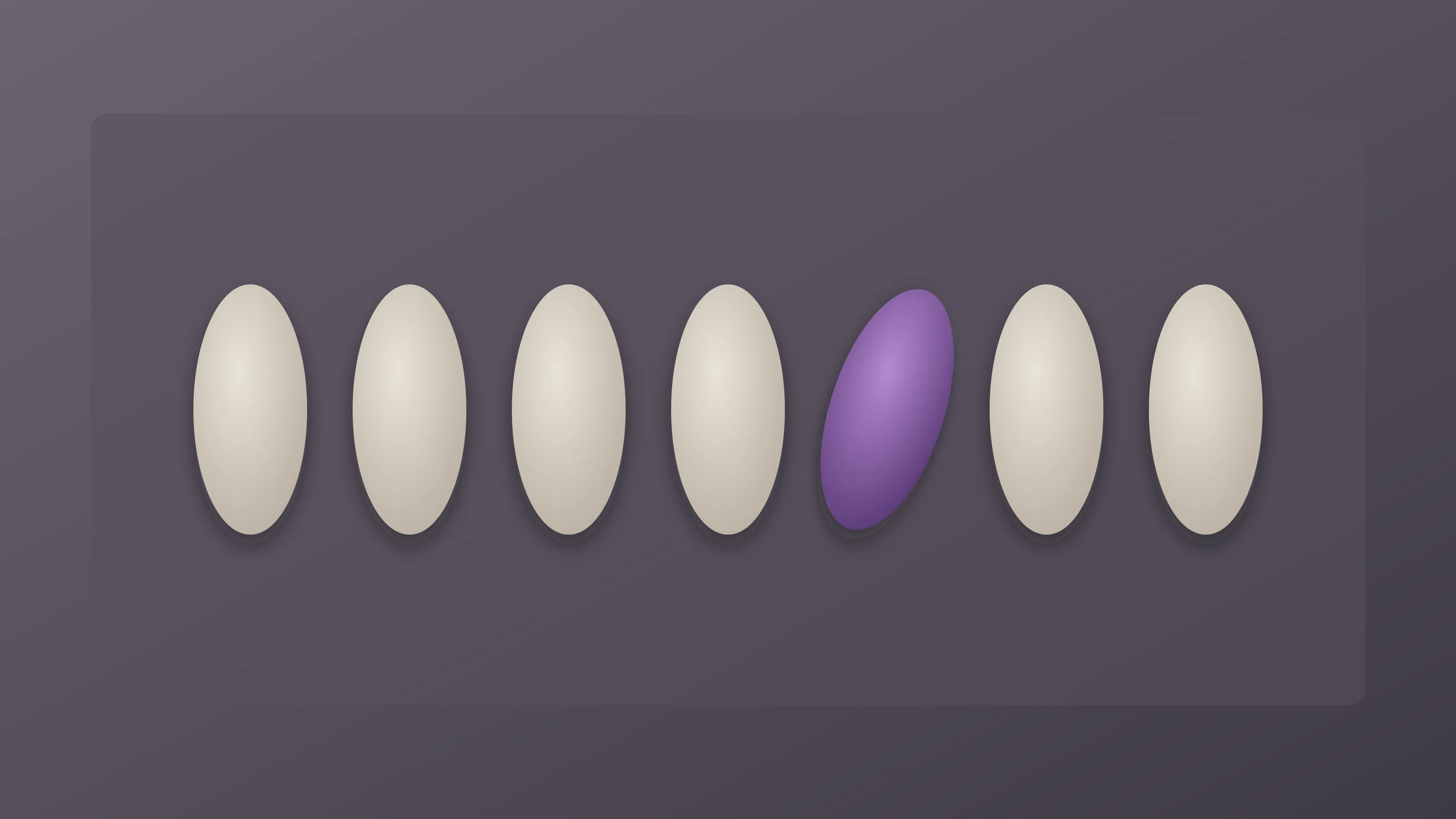
What to know before reading further
- A sign is a clue about your pattern, not a percentile. Several signs that fit together say more than one dramatic one.
- The most useful signs are about combinations and context shifts, not a single extreme trait.
- Many popular “rare” signs, like disliking small talk, are common.
- Rarity is always relative to a reference group. Change the group and the same person can look common or uncommon.
This guide answers: Check which signs actually point to an uncommon personality pattern, which common signs are myths, and how to test a sign against your real behavior.
What a “sign” can and cannot prove
Lists of “signs you have a rare personality” usually sell a feeling: you are special because everyday life frustrates you. That can be comforting. It is a weak way to measure rarity.
A useful sign shows up across situations, survives a second look, and gets more interesting when you ask how many people share the whole combination of traits. A sign can point to an extreme score on a familiar trait, to ordinary scores that rarely appear together, or to a context shift: you change a lot under pressure, intimacy, or public evaluation in a way most people don’t. It cannot prove you are “one in a million,” better than others, or misunderstood by default. For the statistical framing, start with What Makes a Personality Rare?
Fifteen signs that point to uncommon patterns
Treat these as patterns to notice, not trophies to collect. If several fit together, that tells you more than any single item.
- Your opposites are stable. You hold traits that usually pull apart, such as high empathy with high confrontation, or high structure with high novelty, and both show up reliably. See Why Personality Traits Can Conflict.
- People mis-sort you quickly. Friends call you introverted until they see you lead. Colleagues call you cold until they see how hard you protect people you trust. The mis-sort is the clue: your average label hides the combination.
- You change settings more than you change values. Under evaluation you go quiet; with close friends you become decisive. The map of those shifts is clearer than any one mood.
- Status games barely work on you. Praise, titles, or public ranking hardly move you, while fairness or competence does. Low approval-seeking on its own is common enough. Paired with strong drive, it is a less expected mix.
- You need depth of contact more than volume. Small talk drains you, but you will stay for hours on a precise topic. Many high-Openness people share that. It gets more distinctive when you also stay socially warm.
- You notice system failures before social friction. You spot broken incentives, sloppy definitions, or unfair rules early, then get frustrated when others treat the problem as a personality clash.
- You forgive slowly and confront cleanly. You don’t collect grudges for sport, and you don’t paper over betrayal either.
- Curiosity beats the tribe. You revise a belief when the evidence moves, even if your group prefers the old story. Openness is widespread. Openness that holds up under social cost is less so.
- You are calm about practical risk and reactive about trust. Heights, deadlines, or public speaking barely register. Broken agreements do. Context-specific reactivity is a real signal when it is consistent.
- You prefer clear trade-offs to comforting slogans. Moral questions that force a cost, like loyalty against fairness or honesty against kindness, feel more real to you than quizzes that reward sounding good. That is what a morality test tries to measure.
- Your “type” never quite fits. MBTI, enneagram, or aesthetic labels almost work, then break. That often means the typology’s buckets are too coarse for your combination. It does not make you mystical.
- You keep private standards that outrank public ones. You can look inconsistent from outside because you are following a rule other people can’t see.
- You recover your identity after big changes. A new job, city, or relationship scrambles many people’s self-story. You rebuild a recognizable core faster than people around you expect.
- You can hold two motives without picking a team. Ambition and care, solitude and loyalty, skepticism and hope. Lists that demand one core identity feel fake to you.
- You want a score that admits uncertainty. Spectacular “1 in X” claims feel cheap. You would rather see sample size, comparison group, and confidence, even if the number looks less exciting. That preference is not rare by itself, but it is a good filter for whether a personality test is worth trusting.
Signs that sound rare but usually aren’t
Drop these from your checklist unless they attach to a fuller pattern:
- Feeling bored in meetings or group chats.
- Wanting a night alone after social plans. Introverts and tired extroverts both do this.
- Disliking small talk, which is common and culturally loaded.
- Being “too intense” according to one ex. That is a sample size of one.
- Identifying with the rarest MBTI label after a viral quiz. Labels are easy to perform.
If a sign only appears when you are lonely, angry, or scrolling, treat it as a mood, not a profile. Vague descriptions also feel personal to almost everyone; the APA calls this the Barnum effect.
Frequently asked questions
Does matching most of these signs mean I am rare?
It means you have several clues worth testing as a profile. It does not produce a percentile by itself.
Can common people have rare moments?
Yes. Situations create temporary outliers. Fleeson (2001) showed that the same person’s behavior varies widely from moment to moment, so a rarity estimate should weight consistent patterns more than one vivid story.
Is a rare personality better?
No. Uncommon combinations create costs as often as advantages. Description is not ranking.
Why do so many articles inflate rarity?
“You are special” shares well. An honest estimate needs a reference sample and a willingness to say “uncertain.”
How to check a sign against a real profile
Write the combination in plain language: which motives travel together? Then ask where it shows up: work, friendship, conflict, novelty, rest. Ask what would falsify it, such as a normal week where the opposite pattern holds. Compare yourself to a named group, like your workplace or your age group, not “humanity.”
Then prefer a full-profile estimate over a list of flattering extremes. The How Rare Am I? test scores a combined pattern across seven traits, and the EQ & personality test gives you a broader read of motives and pressure behavior.
Use this checklist
- Does the sign show up in more than one setting?
- Does it hold for weeks, or only on one bad day?
- Is it a combination, or one flattering trait?
- Could most people you know say the same thing?
- Have you named the group you are comparing yourself to?
What the evidence supports
If you want a structured pass at your own pattern, take the free How Rare Am I? test, then read the result against the checklist above. Use the signs to interpret the pattern, and don’t use the pattern to inflate the signs. The Rarest Personality Traits explains why the combination matters more than any one sign.
About the RareScore Research Desk
This guide was reviewed for claim strength, source quality, originality, and practical usefulness. The Research Desk is an editorial function, not a licensed clinical service. See the editorial standards and writing-process disclosure.
Sources and further reading
- Fleeson (2001). Toward a structure- and process-integrated view of personality: Traits as density distributions of states. Journal of Personality and Social Psychology
- Mischel & Shoda (1995). A cognitive-affective system theory of personality. Psychological Review
- APA Dictionary of Psychology: Barnum effect